
The Ultimate Guide to Professional Uniforms: Selection, Branding, and Durability in 2026
, by Waterfront Manufacturing Limited , 17 min reading time
, by Waterfront Manufacturing Limited , 17 min reading time
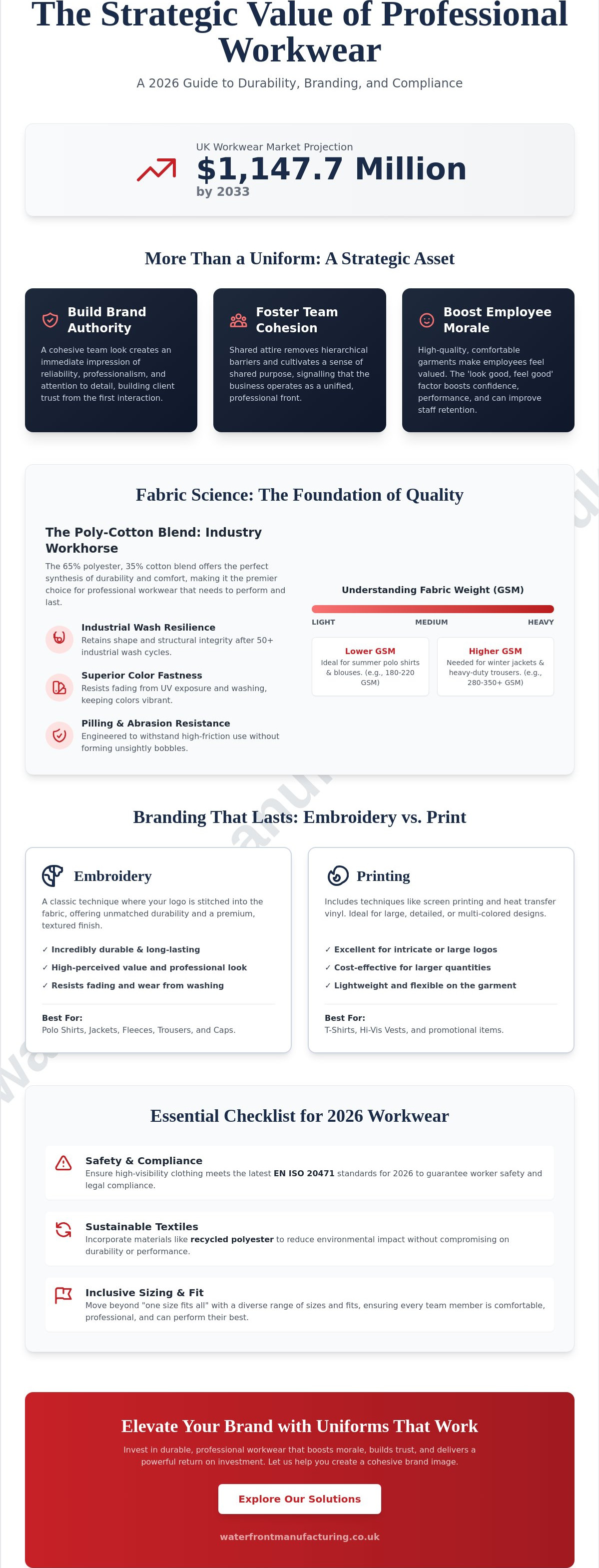
With the UK workwear market projected to grow to $1,147.7 million by 2033, the uniforms your team wears are far more than a simple operational cost; they're a strategic asset for your brand. Many business owners believe …
With the UK workwear market projected to grow to $1,147.7 million by 2033, the uniforms your team wears are far more than a simple operational cost; they're a strategic asset for your brand. Many business owners believe any standard garment will suffice, yet the reality of peeling logos and uncomfortable fits often tells a different story. You're likely aware that a professional appearance is vital, but you're probably tired of replacing worn-out gear every few months or hearing staff complain about restrictive fabrics.
We believe that durability and dignity go hand in hand. In this guide, you'll discover how to select high-quality clothing that balances sharp branding with the practical comfort your team deserves. We'll explore the essential standards for 2026, including the latest EN ISO 20471 safety requirements and the rise of sustainable, performance-driven textiles. From cargo work trousers to tailored jackets, we provide the technical insight needed to ensure your investment yields a better ROI and a more cohesive brand image for years to come.
Professional uniforms serve as a visual handshake between a business and its clients. While the history of workwear suggests a focus on mere utility, modern requirements in 2026 demand a more sophisticated approach. We view a well-designed uniform as a tool for team cohesion; it removes the barriers of hierarchy and creates a shared sense of purpose. When every staff member wears the same high-quality 3-layer softshell jacket or performance polo, it signals that the business operates as a unified front.
The psychological impact of professional attire shouldn't be underestimated. For the wearer, putting on a durable, well-fitted garment acts as a mental trigger to enter a professional mindset. For the client, it provides immediate reassurance of expertise. In 2026, the "one size fits all" mentality has largely failed. Modern workforces are diverse, and a rigid approach to sizing or style often leads to discomfort and resentment. We focus on balancing a strong corporate identity with the functional needs of the individual, ensuring that the clothing is as inclusive as it is professional.
Trust is often established in the first few seconds of an interaction. A cohesive look across your team creates an image of reliability and attention to detail. These garments act as a form of passive marketing; whether your staff are on a construction site in hi-vis waistcoats or in a retail environment wearing v-neck cotton knitwear, they're constantly reinforcing your brand's presence. By integrating your specific corporate colour palette across different garment types, from cargo work trousers to oxford shirts, you maintain a consistent visual message that sticks in the minds of your customers.
Staff turnover is a significant challenge for UK businesses, and the quality of provided workwear plays a surprising role in retention. When employees are expected to wear cheap, ill-fitting clothes that fade after three washes, it sends a message that their comfort isn't a priority. Conversely, providing premium garments fosters a sense of pride. We've seen a clear shift toward smart-casual professional uniforms that allow for movement and breathability. This is particularly relevant when selecting office wearing clothes for women, where the focus must remain on combining a professional silhouette with practical daily function. High-quality uniforms don't just look better; they make the people wearing them feel valued and capable.
Selecting the right material for professional uniforms is a technical decision that determines the lifespan of your investment. While a retail consumer might prioritize fashion, we look for tensile strength, pilling resistance, and colour fastness. The weave of the fabric is just as critical as the fibre itself. A twill weave provides the robustness needed for cargo work trousers, while a plain weave poplin offers the crisp, professional finish required for short sleeve blouses. We ensure every garment we provide meets these rigorous standards of construction.
The choice between natural and synthetic fibres often depends on the specific job role. 100% organic cotton provides unmatched breathability, but it may lack the structural integrity required for heavy industrial use. Recycled polyester is increasingly popular for its durability and lower environmental impact. Research into the psychological impact of clothing shows that when staff feel the quality of their garments, their confidence and performance often improve. We often recommend easy-care finishes that resist stains, as this reduces the maintenance burden on your team and keeps them looking sharp throughout the day.
The 65% polyester and 35% cotton blend remains the industry workhorse for a reason. This specific ratio provides the ideal balance of breathability and strength. It holds its shape after 50+ industrial washes and resists the fading common in pure natural fibres. When selecting garments, pay attention to the GSM (grams per square metre). A lower GSM is suitable for summer performance polo shirts, while a higher weight is necessary for winter softshell jackets or heavy-duty trousers. This blend also offers superior pilling resistance in high-friction areas like the underarms and inner thighs.
For active roles, moisture-wicking technology is essential. These fabrics pull sweat away from the skin to the surface of the garment, where it evaporates. This keeps staff comfortable during physically demanding shifts in the varied UK climate. In sectors like healthcare, 4-way stretch fabrics in tunics allow for a full range of motion without the fabric losing its shape. When evaluating workwear clothing for industrial environments, we prioritize materials that stand up to abrasion and frequent laundering. If you are unsure which fabric suits your specific environment, our team can help you choose the right materials for your business.
Every industry presents a unique set of environmental challenges that dictate the construction and selection of uniforms. A garment that performs well in a climate-controlled office will likely fail on a construction site or in a high-pressure kitchen. We believe in a methodical approach to selection, where the physical demands of the job role are the primary driver of fabric choice and garment design. This ensures that the final kit isn't just a branding exercise, but a functional tool for the person wearing it.
Beyond aesthetics, technical requirements like hygiene standards and safety compliance must be addressed during the planning stage. For instance, healthcare and food service roles require garments that can withstand high-temperature laundering to ensure bacterial control. In contrast, corporate roles often prioritize the longevity of the weave and resistance to creasing. By understanding these nuances, we help businesses avoid the common pitfalls of inconsistent sizing and premature wear.
In the corporate sector, we've seen a shift away from rigid formal suiting toward more versatile separates. Men's tailored jackets and women's tailored trousers are now frequently paired with long sleeve Oxford shirts or v-neck cotton knitwear. This combination offers a professional silhouette while remaining durable enough to withstand the rigours of the daily commute. For those planning large-scale office rollouts, we recommend consulting our guide to corporate uniform suppliers in the UK to ensure a seamless and reliable procurement process.
Hospitality environments require garments that prioritize heat resistance and stain release. Our stud front chef jackets and butcher aprons are designed for frequent washing without losing their structural integrity. While back-of-house staff need protection from spills and heat, front-of-house teams often require a more approachable look, such as short sleeve poplin blouses. Maintaining a cohesive aesthetic across these different roles is essential for brand consistency and team cohesion.
For industrial and outdoor roles, safety and weatherproofing are non-negotiable. High-visibility executive waistcoats must comply with EN ISO 20471 standards to ensure staff remain visible in safety-critical environments. When the weather turns, 3-layer softshell jackets or waterproof storm-proof parkas provide the necessary protection against the elements. We also prioritize reinforced stitching in our cargo work trousers to accommodate the physical activity common for tradespeople. By choosing the right technical apparel, you ensure your team stays safe and productive regardless of the conditions.
Applying your company logo is the final, defining step in the manufacturing process. Choosing between embroidery and printing isn't merely an aesthetic preference; it's a technical decision based on the garment's fabric and its intended use. While a printed logo might offer vibrant detail for a promotional event, professional uniforms subjected to 50 or more industrial washes often require the structural permanence of embroidery. We've found that the right choice depends on balancing the heritage feel of the brand with the practical demands of the workplace.
Cost-efficiency is another factor that requires a methodical approach. Embroidery typically involves a one-time digitisation fee to convert your artwork into a stitch file, making it highly economical for repeat orders or small to medium quantities. Screen printing, however, often requires a setup fee for each colour screen used. This method becomes exceptionally efficient when spread across hundreds of units, such as a large-scale rollout of t-shirts or aprons. We prioritize long-term value over fleeting trends, ensuring the branding method we recommend matches the expected lifecycle of the garment.
Precision embroidery is the preferred choice for premium garments like v-neck cotton knitwear, performance polo shirts, or tailored jackets. This method involves stitching thread directly into the fabric, creating a textured, durable finish that won't fade or peel. The quality depends heavily on the stitch count; a higher density ensures that intricate details remain sharp and the logo doesn't pucker after washing. We handle digitisation in-house to ensure your brand is reproduced with absolute accuracy, adjusting the stitch patterns for the specific tension and weight of the base material.
Modern printing techniques offer versatility for specific garment types and active roles. Screen printing is particularly effective for bulk orders of organic cotton t-shirts or contrast hoodies, where ink is bonded directly to the fibres for a soft but durable finish. For more complex, multi-coloured logos or garments like hi-vis executive waistcoats, heat transfers provide a crisp and modern look. This method uses heat and pressure to apply a durable film to the surface, making it ideal for large back prints or intricate designs that embroidery might struggle to replicate. If you're ready to see how your logo looks on our premium range, you can explore our garment decoration options to find the best fit for your team.
Managing the lifecycle of professional uniforms requires a methodical approach that extends far beyond the initial delivery. A successful programme accounts for the constant flux of a workforce, including new starters, size changes, and the eventual wear and tear of daily use. We've seen that businesses that treat their apparel as a managed asset, rather than a one-off purchase, achieve a significantly better ROI and higher levels of staff satisfaction. It's about ensuring that the precision we apply during manufacturing is matched by the efficiency of your internal distribution.
End-of-life considerations are also becoming a priority for UK firms in 2026. Branded clothing shouldn't simply be discarded; sustainable disposal through textile recycling ensures that your brand's footprint is managed responsibly. By partnering with a total solution provider, you gain a steady hand in navigating these complexities, from the first measurement to the final replacement.
A "right first time" fit is essential to prevent the hidden costs of returns and the frustration of ill-fitting gear. We recommend using physical size sets and detailed measurement guides rather than relying on standard retail sizes, which can vary between manufacturers. It's also vital to address the difference between unisex garments and gender-specific tailoring. For instance, providing Men's Tailored Jackets alongside Women's Tailored Trousers ensures every team member has a professional silhouette that doesn't compromise on comfort. Consistent garment sourcing is the only way to avoid "size creep," where the fit of a medium polo shirt changes between orders.
Your employees should be aware of the financial relief available for maintaining their workwear. As of May 2026, the standard flat-rate allowance for uniform maintenance is £60 per year. This allows basic-rate taxpayers to claim back £12 per year, while higher-rate taxpayers can claim £24, with the ability to backdate claims for up to four previous tax years. To be eligible, the clothing must be a requirement of the job and feature a prominent company logo that identifies the wearer as an employee. This rebate applies only if the employer does not provide laundry facilities for the maintenance of the garments.
Working with an end-to-end manufacturer simplifies your supply chain and reduces the risk of inconsistent branding. Our family-run approach means we take personal accountability for every order, whether you're placing a bulk order for a seasonal rollout or requesting on-demand top-ups for new staff members. We pride ourselves on being a reliable partner that understands the practicalities of UK industry. If you're looking for a steady hand to manage your staff apparel, contact Waterfront Manufacturing for a bespoke uniform consultation and discover the value of true British craftsmanship.
Selecting the right apparel is a technical investment that defines your business's professional standing. We've explored how a methodical approach to fabric science and branding techniques ensures that your uniforms survive the rigours of the modern workplace while maintaining a sharp, cohesive image. By understanding the nuances of lifecycle management and UK tax regulations, you can provide your team with garments that offer both comfort and functional excellence.
Our family-run UK business has supported the industry since 1999. We maintain an in-house embroidery and printing workshop to ensure every garment meets our high standards for durability and precision. With specialist expertise in the hospitality, healthcare, and corporate sectors, we understand the practicalities of your specific environment. We stand behind our work and value the human element of every partnership we form. Request a custom quote for your business uniforms today to begin your professional consultation. We look forward to helping your team look and feel their best.
A 65/35 poly-cotton blend is the most durable fabric for staff apparel. This specific ratio provides the tensile strength of polyester with the natural breathability of cotton. It resists pilling and maintains its colour through repeated industrial washes better than 100% natural fibres. We often recommend this blend for roles that require a balance of professional appearance and long-term structural integrity in demanding work environments.
Employees in the UK can claim a flat-rate tax rebate for the maintenance of their uniforms. As of May 2026, the standard allowance is £60 per year, though specific roles like nurses or ambulance staff can claim higher amounts. This relief helps cover the costs of laundering and repairing branded workwear. It's important to note that this rebate applies to maintenance costs rather than the initial purchase of the clothing.
Embroidery is generally the better choice for longevity and a premium finish on heavier garments like knitwear or polo shirts. It creates a textured logo that stands up to 50 or more industrial washes without peeling or fading. Printing methods like screen printing or heat transfers are better suited for large designs on lightweight t-shirts or high-visibility waistcoats. We suggest choosing based on the fabric weight and the intended daily environment.
We recommend providing a weekly kit that typically includes five shirts or polos, two sweatshirts or hoodies, and one outer layer like a softshell jacket. This ensures staff always have a clean set available while allowing for a manageable laundry cycle at home. Providing fewer sets often leads to premature wear of the garments and can cause dissatisfaction among your team members who might otherwise have to wash their gear every night.
The current safety standard for high-visibility clothing in the UK is EN ISO 20471. This regulation ensures that garments provide adequate visibility in safety-critical environments through specific placements of retro-reflective materials and fluorescent fabrics. Employers are legally obligated to provide this PPE free of charge where a risk assessment deems it necessary. A new draft standard, prМКС EN ISO 20471:2026, is also under review as of May 2026 to further enhance worker safety.
To ensure consistent sizing, we suggest using physical size sets and detailed measurement guides for your entire team. Relying on standard retail sizes often leads to errors because fits vary significantly between different manufacturers. Keeping a record of garment-specific dimensions helps avoid the problem of inconsistent sizing when ordering replacements or top-ups for new starters. This methodical approach reduces the administrative burden of handling frequent returns and ensures staff feel comfortable from day one.
Corporate wear focuses on tailored garments such as jackets, trousers, and Oxford shirts designed for office or client-facing environments. Workwear refers to functional, utility-focused clothing like cargo trousers and hi-vis gear built for manual labour or industrial settings. While the two can overlap, the primary difference lies in the fabric weight and the specific technical features required for the job. We help businesses select the right balance for their specific industry needs and branding goals.
You can make your uniforms more sustainable by selecting garments made from organic cotton or recycled polyester (rPET). These materials reduce the environmental impact of production without compromising on the durability required for professional use. We also suggest implementing a recycling programme for branded items at the end of their lifecycle. This prevents garments from entering landfill and ensures that your brand’s environmental footprint is managed with the same care as your manufacturing standards.